How to Clean Gutters Safely
Most homeowners with a single storey house and a stable ladder can learn how to clean gutters safely on their own. Here's the gear, the ladder rules that actually matter, and the point where a two storey home or a wet roof turns this into a job for someone else.
Most homes in the Lower Mainland only need this done twice a year, and if you own a single storey house with an easy roof line, learning how to clean gutters yourself is a realistic weekend job. The two windows that matter here are late November, once the maples, cedars and alders have finished dropping, and again in early spring before the March rains test whatever grit is left sitting in the channel. Before anything else, get the right gear together. A rushed job with the wrong ladder is where most gutter injuries start, not the gutters themselves.
What you need
Lay this out on the ground before you climb, since going up and down to fetch a forgotten tool is when a lot of falls happen.
- A stable extension ladder with a standoff or stabilizer, the bar that holds the ladder off the gutter edge instead of resting directly on it.
- A spotter to hold the base and hand things up. Working alone on an extension ladder is the single biggest risk in this job.
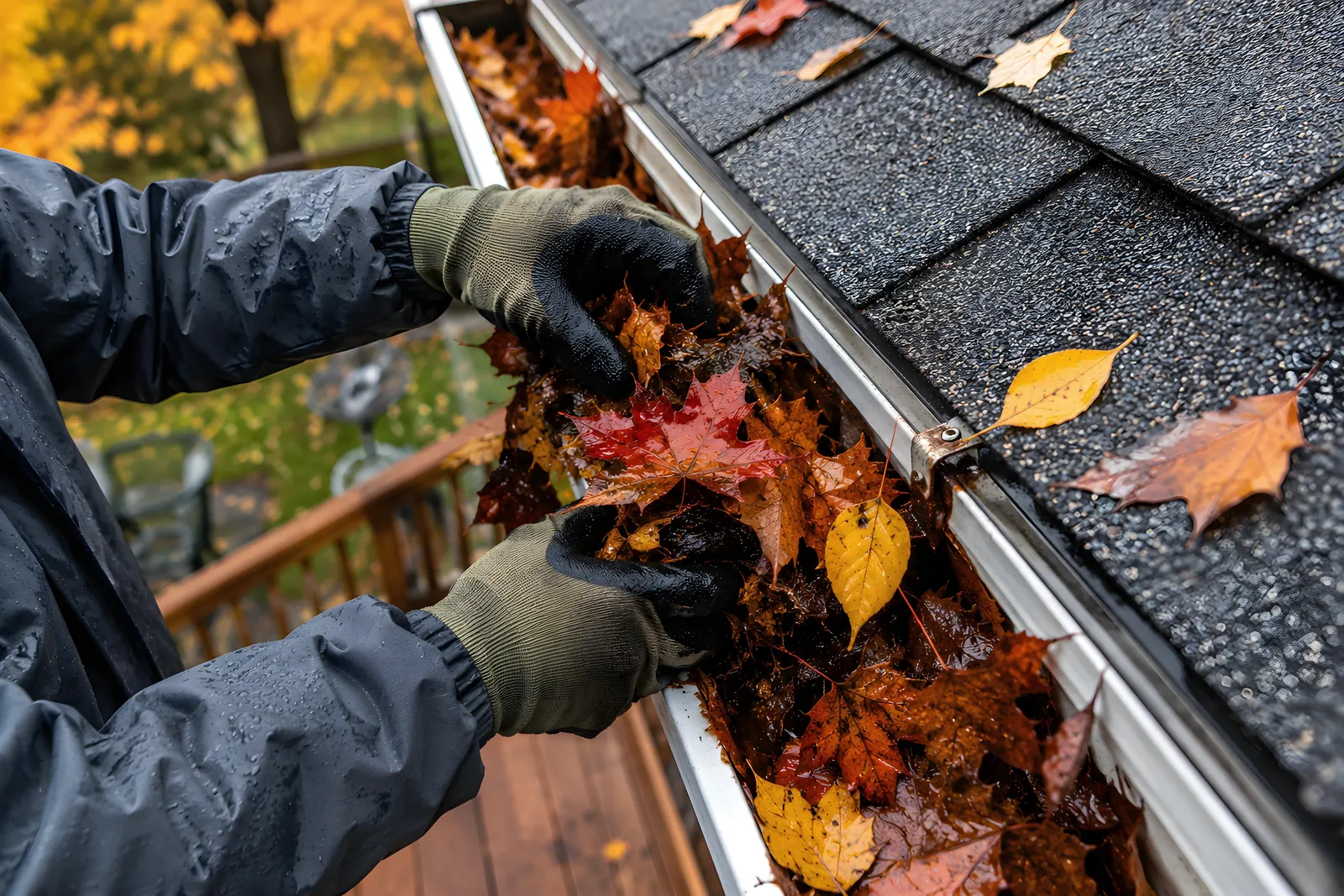
- Work gloves, leather or heavy rubber, since wet gutter debris hides screws, nails and the odd wasp nest.
- A gutter scoop or a garden trowel for pulling packed leaves and needles out by hand.
- A bucket with a hook, or a tarp laid below, so debris isn't dropped straight into the flower beds or onto the lawn.
- A garden hose with a spray nozzle to flush the run once it's scooped clear.
- Eye protection, since old debris and standing water come down harder than people expect once you start moving it.
Ladder safety first
A ladder causes more injuries in this job than the gutters ever do, so get this part right before anything else. WorkSafeBC publishes ladder safety guidance for home and job site use, and the same basics apply on any Lower Mainland roofline:
- Follow the 4 to 1 rule. Set the base 1 foot out from the wall for every 4 feet of height to the point where the ladder rests.
- Extend the ladder about 3 feet, roughly 1 metre, above the edge you'll step onto, so there's something to hold as you get on and off.
- Keep three points of contact at all times: two hands and a foot, or two feet and a hand.
- Never set up on wet grass or soft ground without a board or a plate under the feet first.
- Don't lean past the rails. If you have to stretch to reach a section, come down and move the ladder instead.
- Stay off the top two rungs. They aren't built to be stood on, and the ladder loses its stability up there.
- Keep at least 3 metres clear of overhead power lines, treated as a minimum, not a target. An aluminum ladder near a service line is one of the more serious ways this job goes wrong.
How to clean gutters, step by step
Once the ladder is set and your spotter is in place, work the run in one direction so you aren't doubling back over ground you've already cleared.
- Start near a downspout. Clearing from this end first means anything you push loose has somewhere to go instead of building up in a dry section.
- Scoop debris into the bucket by hand, using the trowel for anything packed tight. Hook the bucket on a rung so both hands stay free.
- Work away from the downspout, moving the ladder in short sections rather than reaching.
- Never lean the ladder against the gutter itself. The stabilizer bar rests on the fascia or roof edge instead, since a loaded ladder can bend a run or pull a section loose.
- Flush the run with the hose from the far end, working the water toward the downspout so it carries the last of the grit with it instead of just moving it around.
- Check the flow at the bottom outlet. Water coming out clear and steady means the run is clean. A trickle or a backup means the downspout itself is blocked.
How do you unblock a downspout?
Most blocked downspouts clear with water pressure alone, worked from both ends before you reach for any tool. Flush from the top opening first, then run the hose up into the bottom outlet to push the clog back out the way it came. A plumber's snake, used gently, handles anything water alone won't move.
- Flush from the top opening with the hose to push loose material down.
- If it still won't drain, run the hose up from the bottom outlet to break the clog from below.
- Take the bottom elbow apart if it's held with screws, since that's where debris packs hardest.
- Work a plumber's snake through gently if water alone hasn't cleared it.
- Skip the pressure washer inside aluminum downspouts. The pressure can split a seam that a garden hose never would.
Can you clean gutters from the ground?
Yes, on a single storey home with light debris. A telescoping gutter wand or a gutter vacuum attachment pulls loose leaves and pine needles out from ground level. They miss packed needles and wet moss, and you can't see the result, so a look from the ladder afterward is still worth it.
On a two storey home, or anything with moss buildup, the wand can't reach the far side of the run or break up anything compacted, so it works better as a between-cleanings touch up than the main job.
When to call a pro instead
Call for help instead of climbing when any of these apply:
- Two storeys or higher. A single storey ladder job and a two storey one are different risks entirely.
- Steep pitch, moss covered, or wet shingles. Footing at the roof edge gets unreliable in these conditions. See our moss removal page if that's the issue.
- No spotter available. Working alone on an extension ladder isn't worth the saving.
- Heavy fir or cedar needle packing. Needles compact into a mat that a scoop alone won't clear without a lot of time on the ladder.
- Signs of damage. A sagging section, pulled hangers or water staining on the fascia point to a gutter repair job, not just a cleaning.

If any of that describes your house, see our gutter cleaning page, our guide on how often gutters should be cleaned, and our cost guide for what a visit from us runs.
DIY Safety Checklist
The two cleaning windows that matter here
1 foot of base for every 4 feet of height
Minimum clearance, not a target
Then check the flow at the bottom outlet
That's a call, not a ladder trip
How to Clean Gutters, FAQ
Two storeys and a wet roof? We'll do it.
Free quotes, all Lower Mainland.