How to Fix Leaking and Sagging Gutters
A leaking seam or a run pulling away from the fascia is often a job a homeowner can handle from a single-storey roof edge with basic tools and a calm afternoon. Here is how to fix leaking gutters and sagging sections step by step, and where the honest line sits between a weekend repair and a call for help.
Most calls about a leaking gutter in the Lower Mainland turn out to be a clog, not a failed part. A run packed with maple leaves, cedar needles, or moss grit holds water high enough that it finds the nearest seam, corner, or nail hole and drips from there instead of draining out the downspout the way it should. Clear the gutter first and watch the next rain before assuming a seal or a hanger has failed. See our gutter cleaning page if the run has not been cleared in a while.
How do you fix a leaking gutter seam or corner?
Dry the joint completely, scrape out the old cracked sealant with a putty knife, and apply a fresh bead of gutter sealant rated for aluminum along the inside of the seam. Let it cure for the time printed on the product label, usually a full day or more, then run a hose down the section to confirm the leak is gone before calling the job done.
- Clear and dry the joint. Wipe out any standing water and let the metal dry fully so the sealant bonds instead of trapping moisture underneath.
- Scrape the old sealant out. A putty knife or plastic scraper removes cracked or peeling material without gouging the aluminum.
- Apply sealant from inside the trough. Run a continuous bead along the seam or corner, working it into the joint rather than smearing it over the surface.
- Let it cure per the label. Rushing this step is the most common reason a fresh repair leaks again within a season.
- Test with a hose. Run water from the far end of the section and watch the repaired joint from underneath before considering it finished.
How do you fix a sagging gutter?
A sagging gutter almost always means one or more hangers have pulled loose, rusted through, or were never spaced closely enough to hold the weight of a full Lower Mainland downpour. Replace old spike-and-ferrule fasteners with hidden hangers screwed straight into solid fascia, check the slope, and confirm the fascia itself is not the real problem before hanging anything back up.
- Find the loose or failed hangers. Sight down the run from a ladder or the ground and look for the low spot where the gutter has pulled away from the roofline.
- Switch to hidden hangers. Spike-and-ferrule fasteners work loose in fascia over time. Hidden hangers screwed in roughly every 24 inches, closer where heavy snow is common, hold far better.
- Check the slope. A common guideline is about a quarter inch of drop for every 10 feet of run toward the downspout. Too flat and water sits and freezes or overflows; too steep and it looks and drains oddly.
- Check for soft fascia. Press on the board behind the hanger. If it gives or feels spongy, the wood is rotting and a repair there goes past a DIY hanger swap into fascia replacement.
End caps and outlets
A leak at an end cap is almost always the factory sealant drying out and cracking with age, the same fix as a seam: clean, dry, reseal, cure, test. A leak right at the downspout outlet is more often a gap where the outlet meets the trough or a crimped connector that has worked loose, and it needs the same sealant treatment plus a check that the outlet strainer or basket is not itself the thing backing water up.
When a repair becomes a replacement
Some damage is past a weekend fix. Call it a replacement job when you see any of the following:
- Fascia that is soft, spongy, or visibly rotted behind more than a short section of hanger
- A run with pinhole rust coming through the metal in several spots, not just one
- Aluminum that has been dented and creased enough to hold water even after it is reattached
- A gutter pulled far enough away from the roofline that the fascia itself has split
See our gutter repair page for what a full repair or section replacement involves.
What affects the cost of gutter repair
Gutter repair cost comes down to how much of the run needs new hangers or sealant, how steep and how high the roof is, whether a lift or extra safety gear is needed to reach it, and whether the fascia behind the gutter is solid or needs its own repair first. A site visit is the only reliable way to price the work, since two homes with the same symptom can need very different amounts of labour. See our cost guide for how pricing factors work across services, and our gutter repair page for what a typical visit covers.
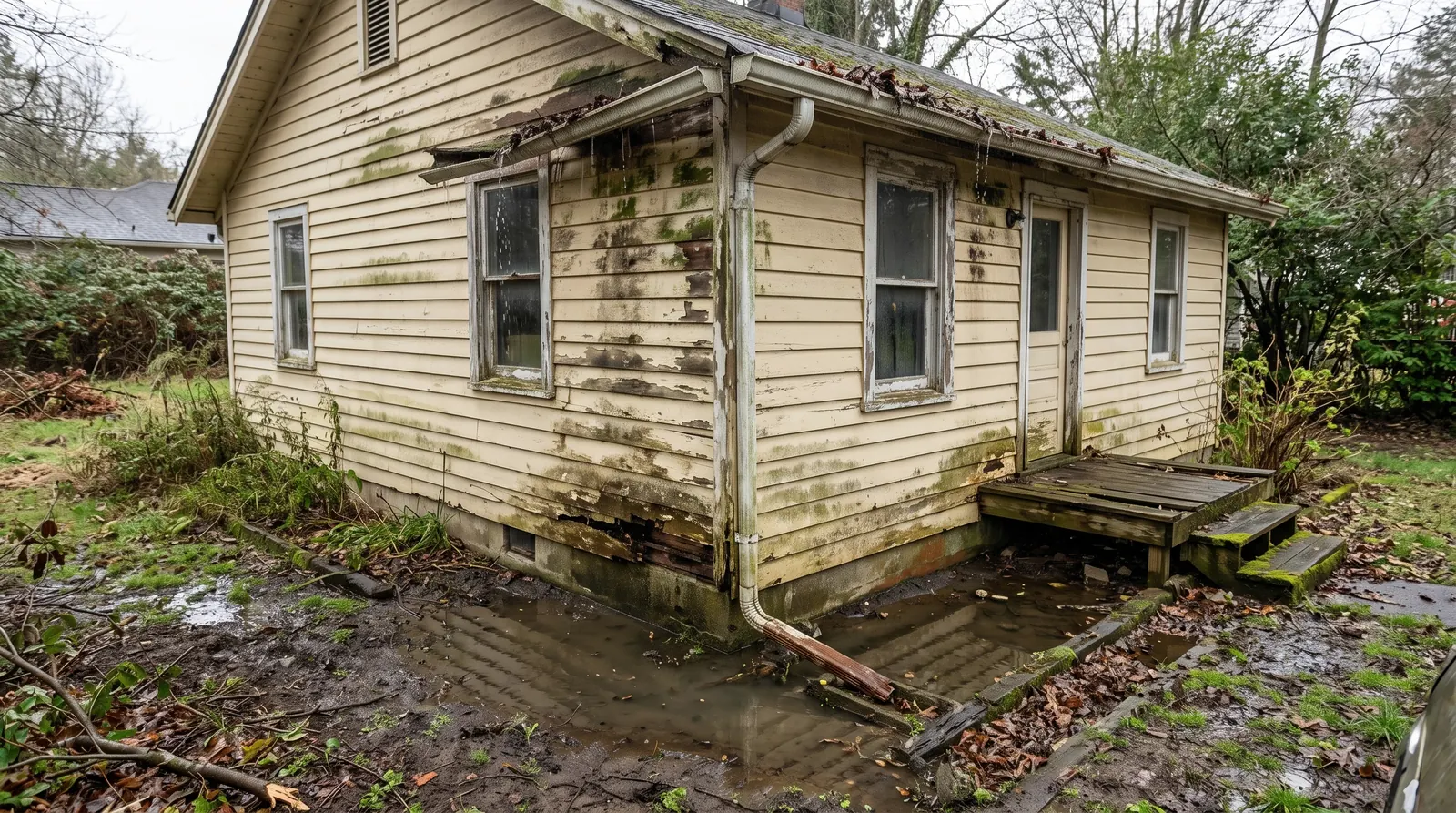
Ice is worth watching too. A hard freeze can pull hangers loose on its own as trapped water expands and pushes outward on the trough, which is one more reason a run that freezes every winter tends to sag first. Our frozen gutters and downspouts guide covers that side of it in more detail.
Any of these steps put you on a ladder against the house. Read our guide on how to clean gutters safely before climbing up, and stop and call for help if the roof is steep, wet, or more than one storey up.
Repair or Replace Checklist
Clean, scrape, reseal, cure, test
Usually loose or failed hangers
Roughly every 24 inches is common
About 1/4 inch per 10 feet toward the downspout
Sign of rot, repair goes past DIY
Leaking and Sagging Gutters, FAQ
Not up for the ladder work? We'll take it from here.
Free quotes, all Lower Mainland.