Hidden Gutter Repair in Vancouver
Hidden gutter repair in Vancouver starts with finding out where the water is really going. Built-in and box gutters sit inside the roof edge, so a blocked drain or a split liner leaks into your soffit and walls before you see anything overflow. We inspect, show you photos, and quote before any work begins. Call (604) 225-1616.
Request a Free Inspection Quote
We respond within a few hours, seven days a week.
What is a hidden gutter?
A hidden gutter is a trough built into the roof edge, or tucked behind a cornice or parapet, instead of hanging off the fascia. You may hear built-in gutter, box gutter, concealed gutter or internal gutter. All mean the same thing: a lined channel that drains through outlets into downspouts or scuppers, out of sight from the street.
In Vancouver you find them on character homes in Kitsilano, Mount Pleasant and East Vancouver, on some Shaughnessy and Kerrisdale heritage houses, and on Vancouver Specials with a boxed-in roof edge. Flat-roof mid-century buildings and strata blocks use the same idea behind a parapet. Because nothing hangs below the roof, nobody thinks to check them until a stain shows up inside.
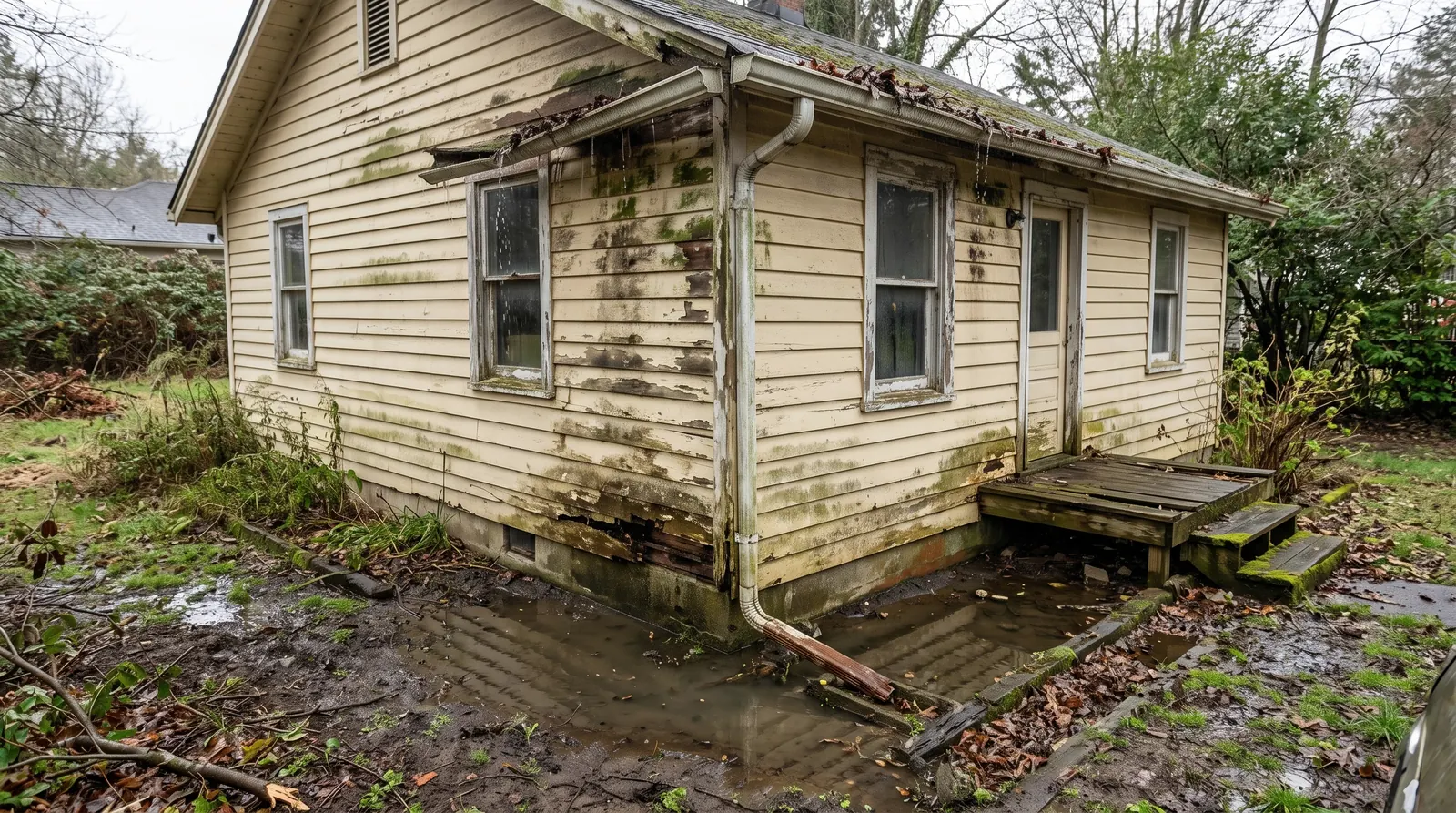
What are the signs your hidden gutter is leaking?
The first signs are usually stains on the soffit or on a ceiling just inside an exterior wall, worst after a few days of rain. Rotted fascia, peeling paint on the cornice and damp insulation are the next clues. A hidden gutter rarely overflows where you can see it, so water travels into the structure instead.
- Brown or yellow rings on the soffit or upstairs ceiling below the roof edge
- Paint bubbling or peeling on the cornice, fascia or wall under the roofline
- Soft, dark or crumbling wood at the fascia or rafter tails
- Moss, algae or a green streak on the wall under a downspout or scupper
- A musty smell in the top-floor rooms after a wet week in November or March
- Water standing in the trough a day after rain has stopped
Leave these alone and the wood in a Vancouver box gutter stays damp for most of the year. With about 1,150 mm of rain a year, it rarely gets a chance to dry out.
Why do built-in gutters fail?
Most built-in gutters fail because the outlet clogs first. Water then stands in the trough, sits against the liner seams and works through them. Age does the rest: metal liners crack after decades of wet and dry cycles, and membrane liners split at seams and corners. Once the liner leaks, the wood under it rots.
A hidden gutter is lined with metal (old ones used tin, terne or galvanized steel, some copper) or with a membrane such as torch-on, rubber or another sheet product. Water leaves through outlets at the low end, into a downspout or out a scupper hole through the parapet. The main failure points are:
- Clogged outlets. Maple, alder and cedar debris and roof grit pack the drain, and the trough fills past the liner edge.
- Failed seams and corners. These move the most and split first, even when the flat parts of the liner look fine.
- Pooled water. A trough that has settled or lost its slope holds water that should have drained, and standing water finds pinholes.
- Cold snaps. Water frozen in an outlet in a December or January freeze blocks the drain and stresses seams as it thaws.
- Old fixes. Roof tar, foam or a shingle roof run over the trough hide the damage and trap moisture.
How does our hidden gutter repair Vancouver service work?
We inspect the gutter first, photograph what we find, and give you a written quote before any work starts. You approve the price, then we do the job. Most visits begin with clearing and flushing the drains, because a blocked outlet is the most common cause of a leaking built-in gutter.
- 1Inspect the trough, outlets, seams and the wood around them, from the roof edge and from inside where we can reach it.
- 2Send you photos of the damage and a written quote. Nothing starts until you approve the price.
- 3Clear the trough by hand and clear the outlets and downspouts so they run freely.
- 4Flush the whole run with water and watch where it goes. This shows us a leaking seam or a low spot that dry debris was hiding.
- 5Do the repair we quoted. If the liner has failed beyond a patch, we tell you and quote the right fix, which may be a reline or a conversion.
- 6Test again with water, send after photos, and haul the debris away.
If we open a section and find rotted wood we did not see at the inspection, we stop and quote it separately. You are never billed for something you have not approved.
Should you repair, reline or convert to external gutters?
Repair when the liner is mostly sound and the wood is dry. Reline when the liner is worn out but the trough framing is solid. Convert to external gutters when the framing has rotted or you want gutters you can see and clean. The right call depends on what the inspection shows.
Repair
Blocked outlets, a split seam or a small patch. Cheapest and quickest, and it works while the wood underneath is still sound.
Reline
The liner has failed along the run but the trough is still straight and dry. The old liner comes out and a new waterproof one goes in.
Convert
Rot in the trough framing, or you want a gutter you can see. See gutter installation in Vancouver for how hung gutters are done.
Cost depends on run length, roof height, access and how much wood needs replacing, so we quote after inspection. For a general idea of how price is worked out, read our gutter replacement cost guide. For ordinary hanging gutters that leak at joints, see gutter repair in Vancouver and how to fix leaking and sagging gutters.
Older houses often have rules about how the roof edge can change. The Vancouver Heritage Foundation is a good place to start if your home is a character or heritage house.
How do you keep hidden gutter drains clear?
Clear the trough and flush every outlet at least twice a year: late November after leaf drop and again in March or April. Add a summer check if cedar or fir hangs over the roof edge. Regular eavestrough cleaning is the cheapest way to protect a built-in liner.
On a two-storey character home with a hidden gutter, the outlet is often out of sight from the ground, so it goes unchecked for years. We clear it by hand, run water through it and confirm it drains at the bottom. If your roof also carries moss, our roof and gutter cleaning service covers both in one visit, so moss does not wash back into the trough.
Hidden gutter repair FAQ
Stains under the roof edge?
Call for a same-week inspection. We photograph the damage, quote in writing, and start only when you approve the price.